GOAT Rankings

Golf · The only game where the arena fights back: 18 holes, no defense, and nowhere to hide from your own mind.

Golf's greatness debate has an unusual advantage: the sport's scoreboard has been essentially stable for a century. Majors have been the currency since the 1920s, stroke play against the field is the same test Hogan faced and Scheffler faces, and nobody plays defense against you. That makes cross-era comparison more honest than in most sports — and makes the central collision starker. Jack Nicklaus won 18 professional majors with 19 runner-up finishes across a quarter century. Tiger Woods won 15, but at a peak — the 2000-01 Tiger Slam, a 15-shot US Open margin, 683 weeks at No. 1 — that no golfer, and arguably no athlete, has matched.

This ranking weighs three things: major championships as the primary currency, dominance over one's own era measured against field strength, and durability. It spans the amateur era, the American postwar boom and the global modern game, and it includes the women's tour, where Annika Sorenstam's peak bears direct comparison with anyone's. Reasonable people re-order the top two; the numbers below make both cases at full strength.

The top 10

1

Jack Nicklaus

United States · 1962–1986

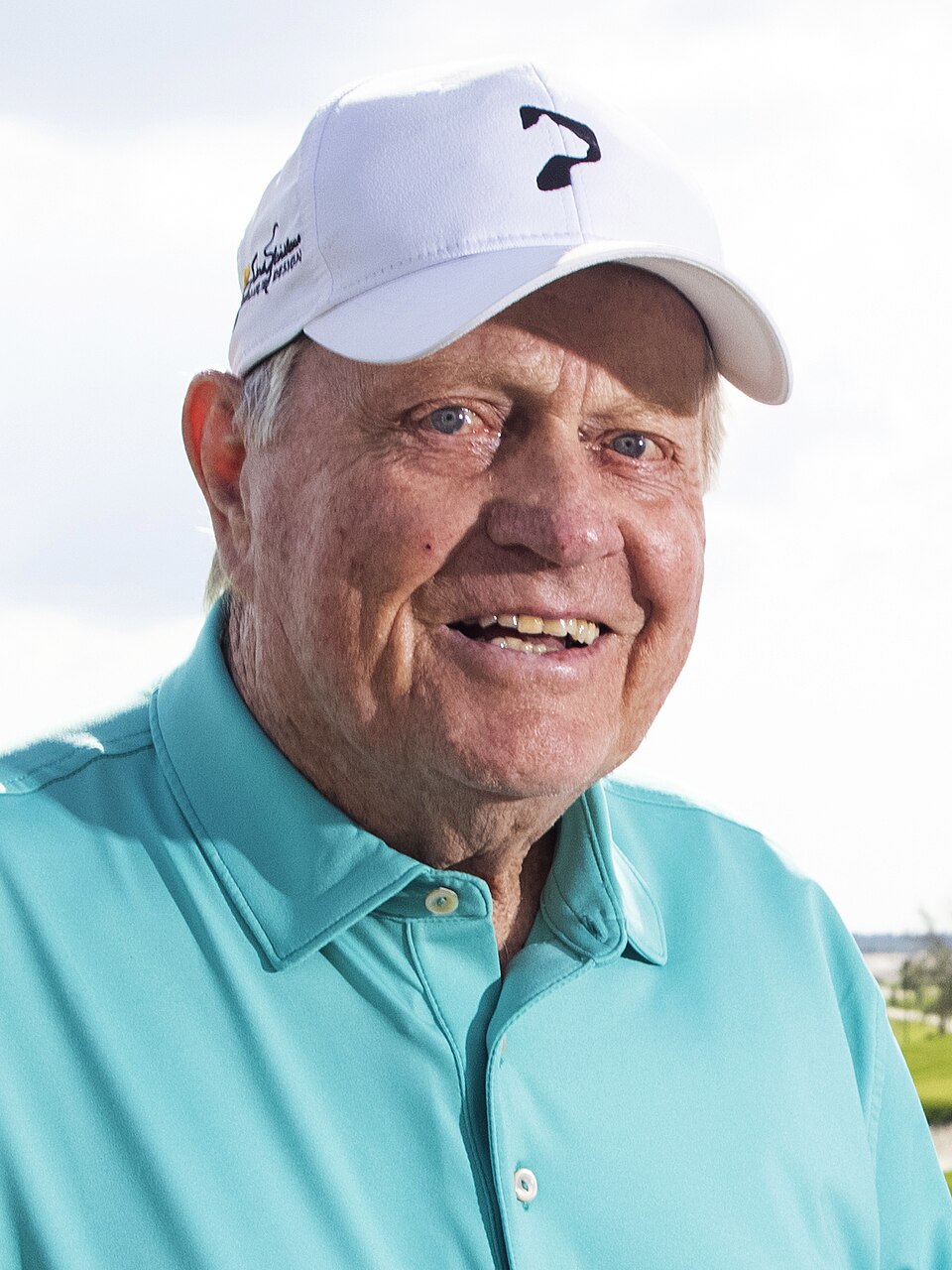
The record is the argument: 18 professional majors, and — the stat that may be more astonishing — 19 second-place finishes in majors. Nicklaus was the best player in the world, or within a shot of it, for 25 years. He won his first major beating Arnold Palmer in a US Open playoff at Oakmont in 1962 as a 22-year-old rookie and his last with a back-nine 30 at the 1986 Masters at 46, the oldest Masters champion ever. Between those bookends: six green jackets, five PGA Championships, four US Opens, three Opens, three career Grand Slams completed, 73 PGA Tour wins and 73 top-10 finishes in majors. He did it against Palmer, Player, Trevino and Watson — Hall of Famers in their primes who took majors off him repeatedly and never diminished him. Add the conservative-aggressive strategic framework that anticipated modern analytics by 50 years, and Nicklaus is the most complete competitive record golf has produced.

Major titles
18
Major runner-ups
19
Major top-10s
73
PGA Tour wins
73
Masters titles
6
2

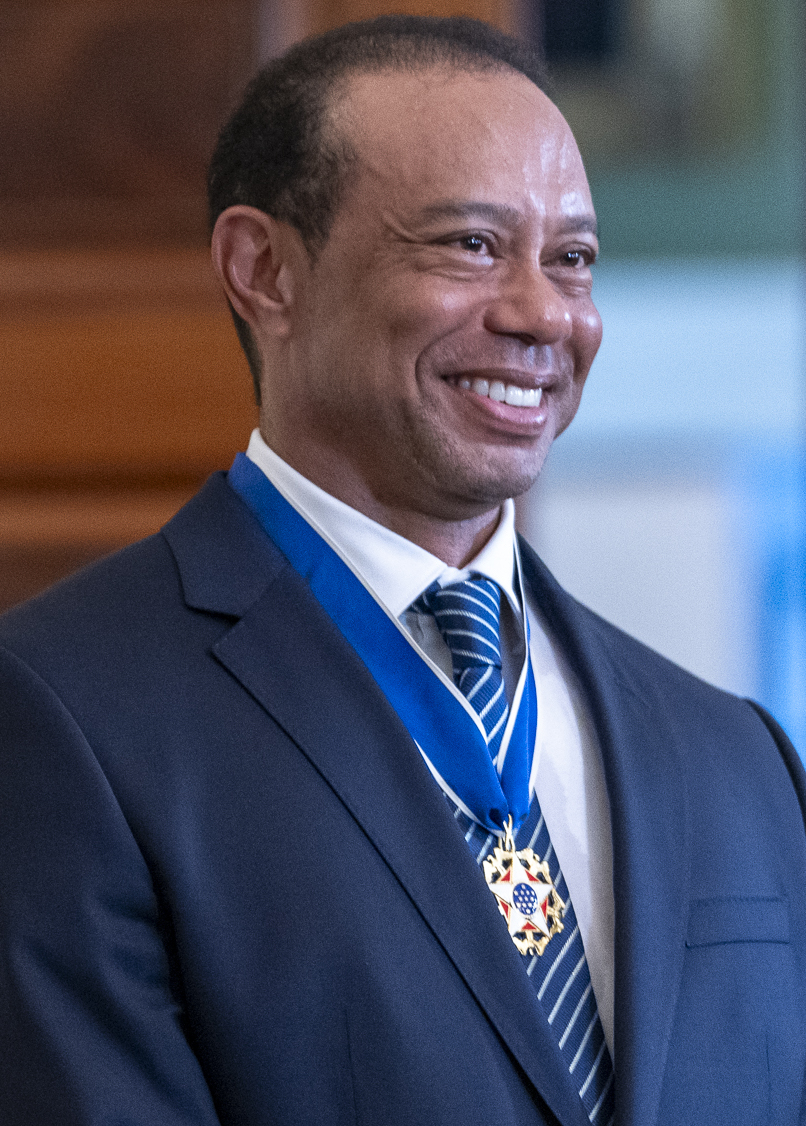
Tiger Woods

United States · 1996–2019 (peak)

Nobody has been better at golf than Tiger Woods was from 1999 to 2008, and it is unlikely anyone ever will be. The 2000 season alone: nine wins, a raw scoring average of 68.17 — the lowest in tour history at the time — and a 15-stroke US Open win at Pebble Beach, the largest margin in major championship history. The 2001 Masters completed the Tiger Slam, all four professional majors held at once, unique in the modern game. The career ledger: 15 majors, 82 PGA Tour wins (tied with Snead for the record), 683 weeks at world No. 1 including 281 consecutive, 142 consecutive cuts made, and a record 11 Player of the Year awards. He won the 2008 US Open in a 91-hole playoff on a double stress-fractured leg and torn ACL, and the 2019 Masters two years after spinal fusion. He also transformed the sport's economics — purses roughly quadrupled in his first decade — and its athletic standards. If peak height outranks career length, Woods is first.

Major titles
15
PGA Tour wins
82
Weeks at No. 1
683
Consecutive cuts
142
Player of the Year
11
3

Ben Hogan

United States · 1938–1959

Hogan is the standard for ball-striking and for will. A late bloomer who fought a hook and poverty through the 1930s, he became the most precise iron player the game had seen, winning nine majors and 64 PGA Tour events. Then, in February 1949, a Greyhound bus hit his car head-on; he threw himself across his wife and survived with a shattered pelvis, broken collarbone and ankle, and lifelong circulatory damage. Sixteen months later he won the 1950 US Open at Merion, walking 36 playoff-deciding holes on bandaged legs. His 1953 season is the most concentrated brilliance in golf history: five wins in six starts, including the Masters, the US Open at Oakmont and the Open at Carnoustie — the only Open he ever entered, won on his first attempt. Six of his nine majors came after the crash. Four US Opens, a career Grand Slam, and a practice ethic — 'the secret is in the dirt' — that created the modern professional template.

Major titles
9
PGA Tour wins
64
US Open titles
4
1953 record
5 wins in 6 starts
4

Sam Snead

United States · 1936–1965

The most natural swing in golf history produced the most wins: 82 official PGA Tour titles, a record that stood alone for six decades until Woods tied it. Snead won across four different decades, took three Masters (1949, 1952, 1954), three PGA Championships and the 1946 Open at St Andrews, and remained lethally competitive into ages no one else has managed — his 1965 Greater Greensboro Open win at 52 years and 10 months still makes him the oldest winner in PGA Tour history, and he finished tied third at the 1974 PGA Championship at 62. His seven majors undersell him: he was runner-up at the US Open four times, the one title that escaped him, twice in circumstances (a final-hole 8 in 1939) that haunted him publicly. His self-taught, syrup-smooth action remained essentially unchanged for 50 years and is still the model teachers show students. On pure volume and longevity, nobody in men's golf matches Snead.

PGA Tour wins
82
Major titles
7
Masters titles
3
Oldest Tour win
52 yrs 10 mo
5

Bobby Jones

United States · 1923–1930

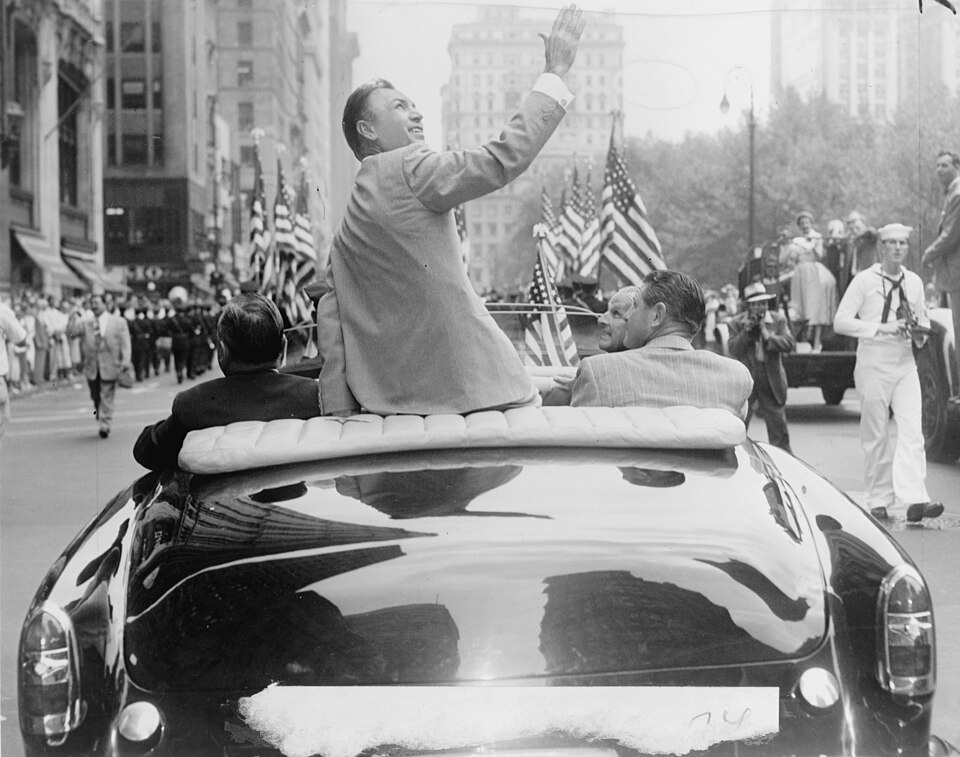
Jones compressed a legend into eight seasons, as an amateur with a law practice, then quit at 28. From his breakthrough at the 1923 US Open to his retirement, he won 13 major championships — four US Opens, three Opens, five US Amateurs and one British Amateur — taking 13 of his final 21 national championship starts, a strike rate no golfer has approached. The summit was 1930: the Open at Hoylake, the British Amateur at St Andrews, the US Open at Interlachen and the US Amateur at Merion in a single summer — the 'impregnable quadrilateral,' the only single-season Grand Slam ever completed, celebrated with a Broadway ticker-tape parade. He beat the best professionals of his era, Hagen and Sarazen among them, while playing perhaps three months a year. In retirement he co-designed Augusta National with Alister MacKenzie and founded the Masters in 1934, meaning he built one of the four pillars of the modern game after finishing with the other three.

Major titles
13
US Open titles
4
1930 Grand Slam
4-for-4
Final 21 nationals
13 wins
6

Walter Hagen

United States · 1914–1929

Hagen's 11 majors still rank third all-time, and he collected them with a flamboyance that changed the professional's place in the world. His five PGA Championships came when the event was pure match play, including four consecutive titles from 1924 to 1927 and a run of 22 straight matches won — a streak of head-to-head dominance with no equivalent in golf. Add two US Opens (the first in 1914) and four Open Championships between 1922 and 1929, when crossing the Atlantic to compete was itself an undertaking. His scrambling and putting under pressure were legendary precisely because his long game was mortal; 'three of those and one of them counts four' was his philosophy of the recovery shot. Off the course he mattered as much: barred, as a professional, from clubhouses that welcomed amateurs, he hired limousines as changing rooms and shamed the class barrier out of existence. Every golfer who has earned a living from the game since owes Hagen a percentage.

Major titles
11
PGA Championships
5
Consecutive PGAs
4 (1924–27)
PGA match streak
22 wins
7

Gary Player

South Africa · 1959–1978

The 'Black Knight' globalized excellence. A 5-foot-6 South African in an American-dominated sport, Player won nine majors across three decades and completed the career Grand Slam at 29 with the 1965 US Open at Bellerive — at the time only the third man to do it, after Sarazen and Hogan, and still one of six. His three Masters spanned 17 years, the last in 1978 at 42 with a closing 64 to win from seven back. His three Opens spanned 1959 to 1974, and his 1965 to 1974 stretch made him the only serious rival to Nicklaus's supremacy. The totals: 24 PGA Tour wins and more than 160 worldwide, accumulated across an estimated 15-million-plus miles of travel — he is plausibly the most traveled athlete in history. He was also decades ahead on fitness, doing daily gym work when contemporaries considered it swing-ruining eccentricity. Pound for pound and mile for mile, no golfer extracted more from his circumstances.

Major titles
9
Worldwide wins
160+
Career Grand Slam
1965, age 29
Masters titles
3
8

Arnold Palmer

United States · 1955–1973

Palmer's seven majors came in a furious seven-season burst from 1958 to 1964 — four Masters, two Opens, and the 1960 US Open at Cherry Hills, where he drove the 346-yard first green and shot a final-round 65 to win from seven strokes back, the charge that defined him. His 62 PGA Tour wins rank fifth all-time, and he took four Vardon Trophies for low scoring average. But Palmer's greatness is only half-measured in trophies. Arriving simultaneously with television, he made golf mass entertainment: Arnie's Army was sport's first branded fanbase, his handshake deal with Mark McCormack founded the modern athlete-management industry, and his decision to contest the Open Championship from 1960 onward — winning in 1961 and 1962 — single-handedly restored the oldest major's prestige with American players. He became the first golfer to reach $1 million in career tour earnings in 1968, and the game's commercial architecture is still recognizably the one he built.

Major titles
7
PGA Tour wins
62
Masters titles
4
Vardon Trophies
4
9

Annika Sorenstam

Sweden · 1994–2008

The most dominant golfer of her generation in either gender's game, Sorenstam won 72 LPGA titles — third all-time — and 10 majors in a career she ended, still near her peak, at 38. Her 2001-2005 stretch bears comparison with Tiger's: in 2001 she shot 59 at the Standard Register PING, still the only sub-60 round by a woman in competition; in 2002 she won 11 LPGA events (13 worldwide) with a season scoring average of 68.70, then a record. She won eight Rolex Player of the Year awards and five Vare Trophies, and in 2003 accepted an invitation to the PGA Tour's Colonial — the first woman in a men's tour event since Babe Zaharias in 1945 — striking it well enough tee-to-green to silence the ridicule even in missing the cut. Her machine-like pre-shot routine and fitness regime professionalized the women's game, and her scoring records stood as the benchmark for the generation that followed.

Major titles
10
LPGA Tour wins
72
Lowest round
59 (2001)
Player of the Year
8
2002 scoring avg
68.70
10

Tom Watson

United States · 1974–1984

Watson is the man who beat Nicklaus head-to-head, repeatedly, in the Bear's prime. The 1977 'Duel in the Sun' at Turnberry — Watson 65-65 over the weekend to Nicklaus's 65-66, winning by one at a record 268 while third place finished 11 back — remains the greatest sustained two-man duel in major history. Five years later he chipped in from gnarly rough on Pebble Beach's 17th to snatch the 1982 US Open from Nicklaus again. His eight majors include five Open Championships between 1975 and 1983, a total only Vardon's six exceeds in the modern rota era, plus two Masters. He won 39 PGA Tour titles and six Player of the Year awards, and his wind-hardened links craft was so durable that at 59, in the 2009 Open at Turnberry, he stood on the 72nd tee with the lead — one eight-foot putt from the most extraordinary win in the history of sport, before losing the playoff to Stewart Cink.

Major titles
8
Open Championships
5
PGA Tour wins
39
Player of the Year
6
Turnberry 1977
268 (−12)

Bars are scaled to the leader in this list.

The debate

The honest version of the Nicklaus-Woods argument starts by conceding both premises. Nicklaus's 18 majors and 19 seconds represent a length and consistency of contention Woods never matched: Nicklaus finished top-10 in 73 majors across 25 years, while injuries and upheaval left Woods with a decade-long major drought in what should have been his late prime. Woods's counterweight is field depth and peak height: he beat fields drawn from a globalized, athletically trained talent pool that was demonstrably deeper than the 1960s tour — dozens of players in every field capable of winning, against the handful of genuine contenders of Nicklaus's day — and his 1999-2008 stretch, 13 majors in 10 seasons with scoring records that still stand, has no analogue in Nicklaus's career. Which premise you weight is a genuine philosophical choice, not a factual dispute.

Cross-era honesty also requires discounting carefully in both directions. Jones's 13 majors include amateur championships against fields no modern amateur event approaches, but he also beat the era's best professionals at their own championships while playing part-time. Hagen's five PGA titles came at match play, a format that rewards different virtues than 72-hole aggregates. Snead's and Hogan's win totals accumulated when tour fields were thinner but travel, equipment and agronomy were brutally harder. And any list confined to the men's game quietly assumes an answer to a question worth asking openly: Sorenstam's and Mickey Wright's dominance over their fields — Wright's 13 majors and 82 LPGA wins mirror the men's records almost exactly — was as complete as anything the men produced. Greatness is dominance over the available competition; by that standard the top of this list is crowded, and the ordering is a judgment, not a measurement.

Keep exploring

More sports