GOAT Rankings

Baseball · The clockless chess match where a round bat meets a round ball and the best hitters on earth still fail seven times out of ten.

Baseball's GOAT debate is unusually tractable because the sport's structure isolates individual contribution: a plate appearance belongs to one hitter, and a century and a half of records allows genuine cross-era accounting through league-relative measures. Wins Above Replacement is the spine of any honest ranking — it prices hitting, baserunning, defense, and position — but it cannot be the whole argument. Peak dominance, postseason record, two-way value, and the competitive depth of a player's era all belong in the ledger.

This list weighs career value first, peak height second, and historical impact third, using Baseball-Reference WAR as the common currency. It penalizes no one for segregation-era circumstances they did not choose, but it names the caveat where it applies: pre-1947 stars never faced the full talent pool, and the greatest Negro Leagues players — Josh Gibson, Oscar Charleston, Satchel Paige — were denied the career-length major league records that a list like this is built on. Their absence from the ranking is a fact about the sport's history, not their ability.

The top 10

1

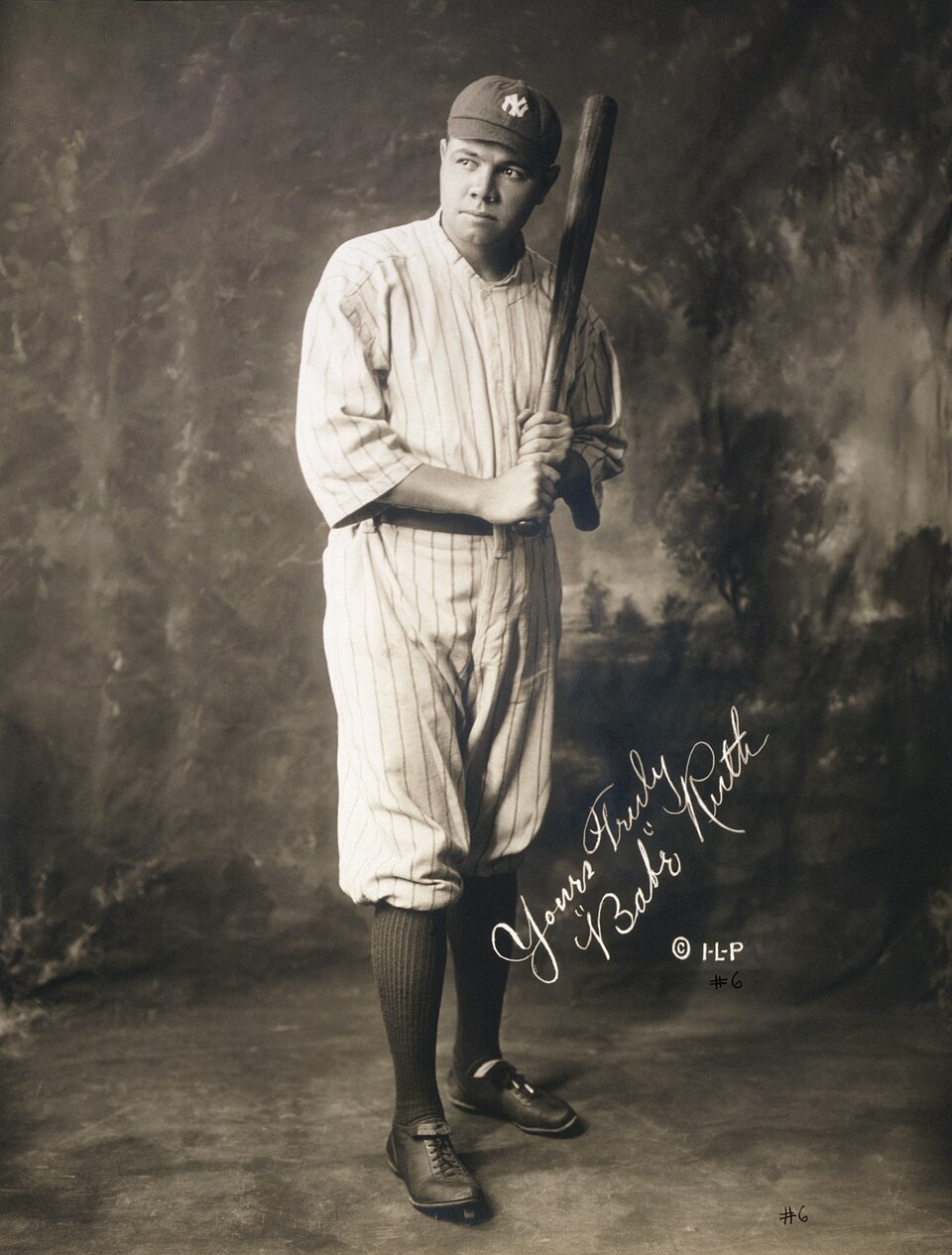
Babe Ruth

United States · 1914–1935

The gap between Ruth and his contemporaries remains the largest any team-sport athlete has opened. His 182.6 career WAR leads all players, and the shape of it is absurd: before becoming a full-time hitter he went 94-46 as a pitcher with a 2.28 ERA, led the AL with a 1.75 ERA in 1916, and threw nearly 30 consecutive scoreless World Series innings. Then he invented modern offense. His 54 home runs in 1920 exceeded the total of every other American League team; his 60 in 1927 out-homered each AL rival again. His career .342 average, .474 on-base percentage, and 1.164 OPS — still the all-time record — came with a slugging percentage (.690) no qualified career has matched. He faced a segregated talent pool, which the debate must acknowledge, but dominance relative to environment is the fairest cross-era test, and by that test Ruth has no peer.
Career WAR
182.6
Home runs
714
Career OPS
1.164
Batting average
.342
Wins as pitcher
94 (2.28 ERA)
2

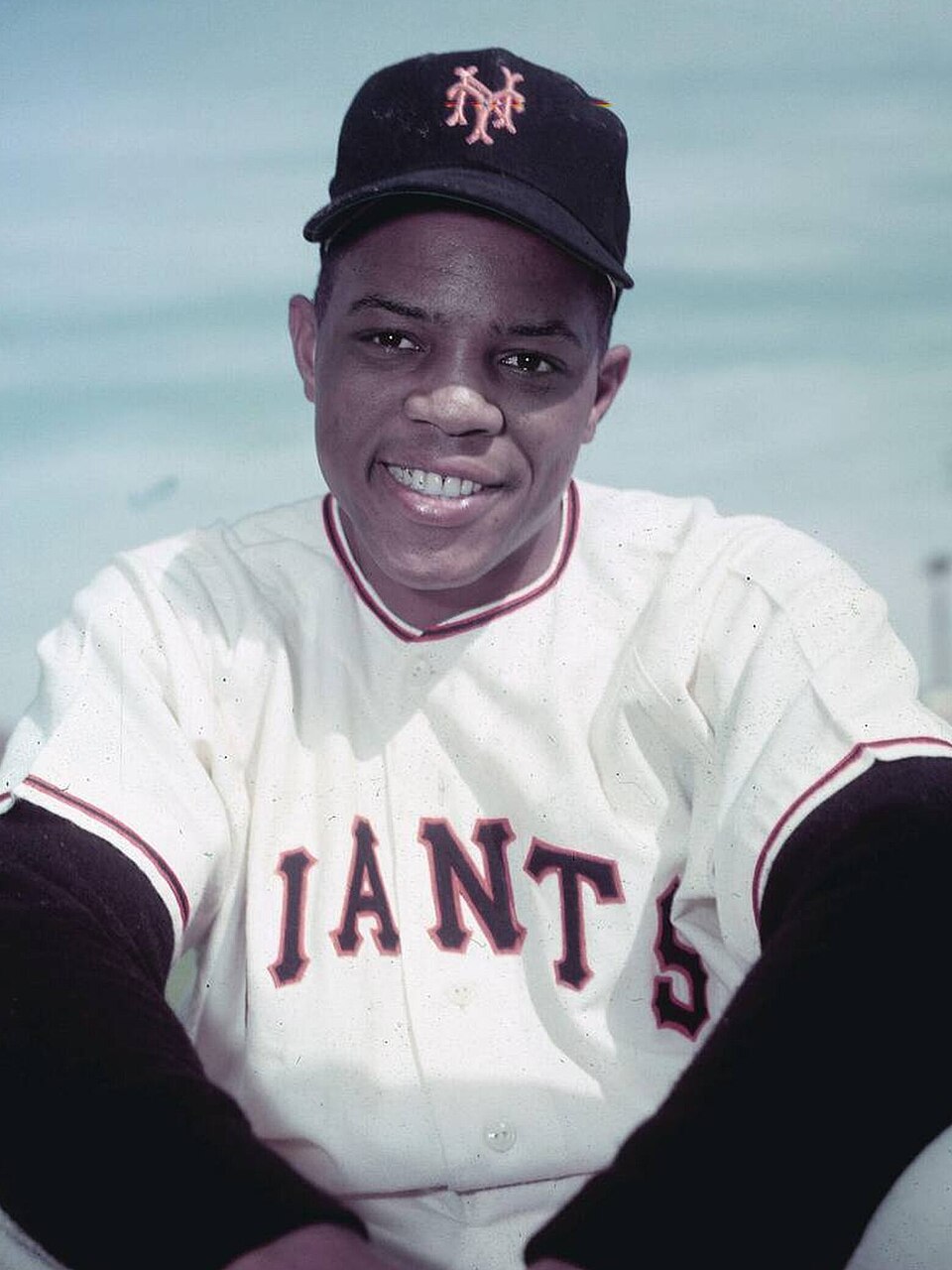
Willie Mays

United States · 1951–1973

The most complete player the sport has produced. Mays hit 660 home runs with a .301 average, stole 338 bases, scored more than 2,000 runs, and won 12 consecutive Gold Gloves in center field — the sport's most demanding everyday position — while playing in 24 All-Star Games. His 156.2 WAR is the highest of any player who debuted after integration, and it survives every adjustment: park effects (Candlestick's winds suppressed his power for years), era, and the nearly two full seasons he lost to Army service in 1952-53, which plausibly cost him the home run record. The Catch off Vic Wertz in the 1954 World Series — a sprinting, over-the-shoulder grab 420-plus feet from home, followed by an impossible spin throw — is the sport's defining defensive image. If the GOAT question asks who could do everything on a baseball field at the highest level, the answer is Mays.

Career WAR
156.2
Home runs
660
Hits
3,293
Gold Gloves
12
All-Star Games
24
3

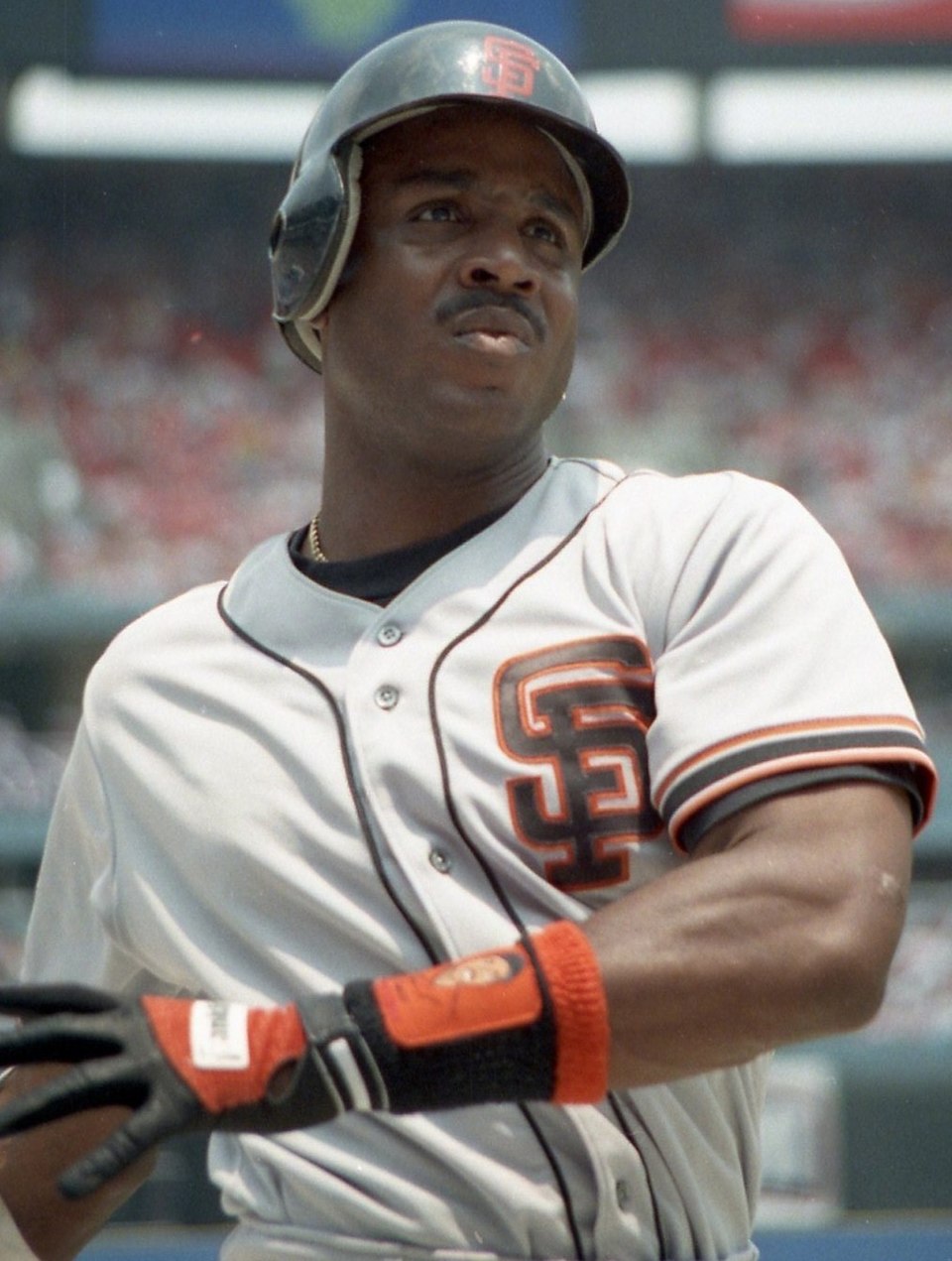
Barry Bonds

United States · 1986–2007

The record book says Bonds is the greatest hitter who ever lived: 762 home runs, 73 in a single season (2001), seven MVP awards when no one else has more than three, 2,558 walks, and the only 500-homer, 500-steal career in history. His 2001-2004 peak is statistically unmatched by anyone including Ruth — in 2004 he reached base at a .609 clip, walked 232 times (120 intentionally), and posted a 1.422 OPS. The BALCO scandal is why he sits third rather than first, and why he never reached the Hall of Fame despite ten years on the ballot. The honest accounting: Bonds had accumulated three MVPs, eight Gold Gloves, and roughly 100 WAR — an inner-circle career — before the period his trainers' indictments cover began around 1999. He was an all-time great who then chemically extended and elevated his peak; both clauses are true, and any ranking must hold them together.

Home runs
762
MVP awards
7
Career WAR
162.8
Career OPS
1.051
Stolen bases
514
4

Hank Aaron

United States · 1954–1976

Aaron is the sport's monument to sustained excellence. He never hit 50 home runs in a season, yet finished with 755 — breaking Ruth's record on April 8, 1974, while receiving nearly a million pieces of mail, much of it death threats — and he remains the all-time leader in RBI (2,297) and total bases (6,856, a full 722 ahead of second place). He hit .305 for a quarter century, collected 3,771 hits, made a record 25 All-Star selections, and posted 15 seasons of 30-plus homers. Remove all 755 home runs from his record and he would still have more than 3,000 hits. Aaron's 143.1 WAR understates the difficulty of his context: he began in the Negro Leagues with the Indianapolis Clowns in 1952 and produced his greatest seasons through the pitching-dominant 1960s in Milwaukee and Atlanta, far from the media capitals that minted legends.

Career WAR
143.1
Home runs
755
RBI
2,297 (record)
Total bases
6,856 (record)
Hits
3,771
5

Ted Williams

United States · 1939–1960

The purest hitter in history by nearly any rate measure. Williams's career .482 on-base percentage is the all-time record, his 1.116 OPS trails only Ruth, and his .344 average came with 521 home runs — power and discipline fused as no one has fused them since. He hit .406 in 1941, the last .400 season, famously refusing to sit on the final day and going 6-for-8 in a doubleheader to finish there. He won two Triple Crowns (1942, 1947) and somehow lost the MVP vote both times. The counterfactual defines him: he missed all of 1943-45 training as a naval aviator during World War II and most of 1952-53 flying combat missions as a Marine pilot in Korea, costing him roughly five prime years. Conservative projections put his career at 650-plus homers and near 3,300 hits. He hit .388 at age 38 and homered in his final at-bat in 1960.

Career WAR
121.8
Batting average
.344
On-base pct
.482 (record)
Career OPS
1.116
Home runs
521
6

Walter Johnson

United States · 1907–1927

The greatest pitcher ever, and it is not especially close. Johnson won 417 games — second only to Cy Young — for Washington Senators teams that were frequently terrible, with a 2.17 career ERA and a record 110 shutouts that will never be approached. His 3,509 strikeouts, achieved with a sidearm fastball contemporaries simply called invisible, stood as the record for 56 years until Nolan Ryan passed it in 1983. His 1913 season is arguably the best ever by a pitcher: 36-7 with a 1.14 ERA and 11 shutouts across 346 innings. Unlike many dead-ball stars, Johnson aged into legend: at 36 he finally reached the World Series in 1924, lost twice, then won Game 7 with four scoreless relief innings on one day of rest. His combined pitching and hitting WAR of roughly 165 ranks behind only Ruth among all players at any position.

Career WAR
164.8
Wins
417
Career ERA
2.17
Shutouts
110 (record)
Strikeouts
3,509
7

Ty Cobb

United States · 1905–1928

Cobb was the perfected weapon of dead-ball baseball: a .366 career average that stood as the official record for a century — until MLB's 2024 incorporation of Negro Leagues statistics placed Josh Gibson's .372 above it — plus 4,189 hits, 897 stolen bases, 2,245 runs, and a dozen batting titles by most counts, including nine straight from 1907 to 1915. He hit over .400 three times, won the 1909 Triple Crown without a single over-the-fence home run, and stole home 54 times, still the record. His 151.5 WAR came almost entirely from hitting and baserunning in an era when a five-homer season could lead the league. The caveats are real: he played against a segregated talent pool, his game did not project power, and his reputation for violence — partly exaggerated by a discredited biographer, partly earned — complicates his legacy. As a pure hit machine, only Gibson's shorter-season record outranks him.

Career WAR
151.5
Batting average
.366
Hits
4,189
Stolen bases
897
Runs scored
2,245
8

Stan Musial

United States · 1941–1963

Musial's symmetry is the stuff of legend: 3,630 career hits, exactly 1,815 at home and 1,815 on the road. The consistency behind the coincidence is the case for him — a .331 average across 22 seasons, 475 home runs, 6,134 total bases (second all-time behind only Aaron), three MVPs, seven batting titles, and 24 All-Star Games, all for the St. Louis Cardinals, with a missed 1945 season to Navy service. In 1948 he came one rained-out home run short of the Triple Crown, hitting .376 with 39 homers and 131 RBI while leading the league in eight major categories. He struck out only 696 times in nearly 11,000 career plate appearances — fewer than many modern hitters accumulate in five seasons. He was never suspended, never ejected, and never controversial, which is partly why history underrates him. The numbers do not.

Career WAR
128.6
Hits
3,630
Batting average
.331
Total bases
6,134
MVP awards
3
9

Mickey Mantle

United States · 1951–1968

The greatest peak of the 1950s and the best switch-hitter ever. Mantle won the 1956 Triple Crown (.353, 52 home runs, 130 RBI), took three MVPs and finished second three more times, and posted a career .977 OPS with 536 home runs despite playing his entire career on a right knee shredded in the 1951 World Series — famously, teams could hear the training-room tape being unwrapped. His speed before the injuries was mythic (3.1 seconds home to first bunting left-handed), and his power produced the term 'tape-measure shot' after a 1953 blast in Washington was measured at 565 feet. He played in 12 World Series in his first 14 seasons, winning seven, and his 18 World Series home runs remain the record. His 110.2 WAR in 18 seasons, on ruined legs, leaves the sport's greatest what-if: a healthy Mantle plausibly challenges Mays for the number two spot on this list.

Career WAR
110.2
Home runs
536
Career OPS
.977
World Series titles
7
World Series HR
18 (record)
10

Shohei Ohtani

Japan · 2018–present (NPB 2013–2017)

The only player on this list still adding to his case, and the only one doing something Ruth abandoned in 1919: genuine two-way play at an MVP level. Through 2025 Ohtani has four MVP awards — every one unanimous — in five seasons, a feat matched by no one; 280 career home runs alongside 38-plus wins and 650-plus strikeouts as a pitcher; and the first 50-50 season in history in 2024, finishing 54 homers and 59 steals and clinching the milestone with a 6-for-6, three-homer game. His 2023 WBC ending — striking out Mike Trout, his Angels teammate, to seal Japan's title — and his 2025 postseason game against Milwaukee, ten strikeouts as the starting pitcher and three home runs as the leadoff hitter in the same night, are already mythology. His 700-million-dollar Dodgers contract reset sports economics. Ranked tenth on accumulated value; no active player is more likely to climb.

MVP awards
4 (all unanimous)
2024 season
54 HR / 59 SB
Home runs
280 (as of 2025)
Strikeouts as pitcher
650+
Career WAR
≈50 (as of 2025)

Bars are scaled to the leader in this list.

The debate

Cross-era comparison in baseball demands three honest adjustments. First, the talent pool: pre-1947 stars never faced Black or Latino competition, and pre-1990s stars rarely faced today's global pipeline — a league drawing from Japan, Korea, Venezuela, and the Dominican Republic is simply deeper than one drawing from white America. Second, conditions: dead-ball hitters faced doctored balls and unlit parks, while modern hitters face 94 mph average fastballs, five fresh relievers a night, and defenses positioned by data — there is no neutral answer to which is harder, only the discipline of judging players against their own league's baseline. Third, the chemical era: Bonds's numbers are real events that occurred against pitchers who were also, in meaningful numbers, using.

The deepest omission is structural. Josh Gibson's .372 average now tops the official leaderboard, Satchel Paige was a legend for two decades before his 1948 MLB debut at 42, and Oscar Charleston appears on shortlists compiled by every serious Negro Leagues historian — yet none can be ranked here on comparable career records, because the records were never allowed to exist. Any baseball GOAT list is therefore a ranking of the documented, not the definitive. Within those limits, Ruth's relative dominance, Mays's completeness, and Bonds's compromised peak frame the argument — and Ohtani, uniquely, is running Ruth's experiment against the deepest talent pool ever assembled.

Keep exploring

More sports